
Bolstering your existing blue light towers
911Cellular
|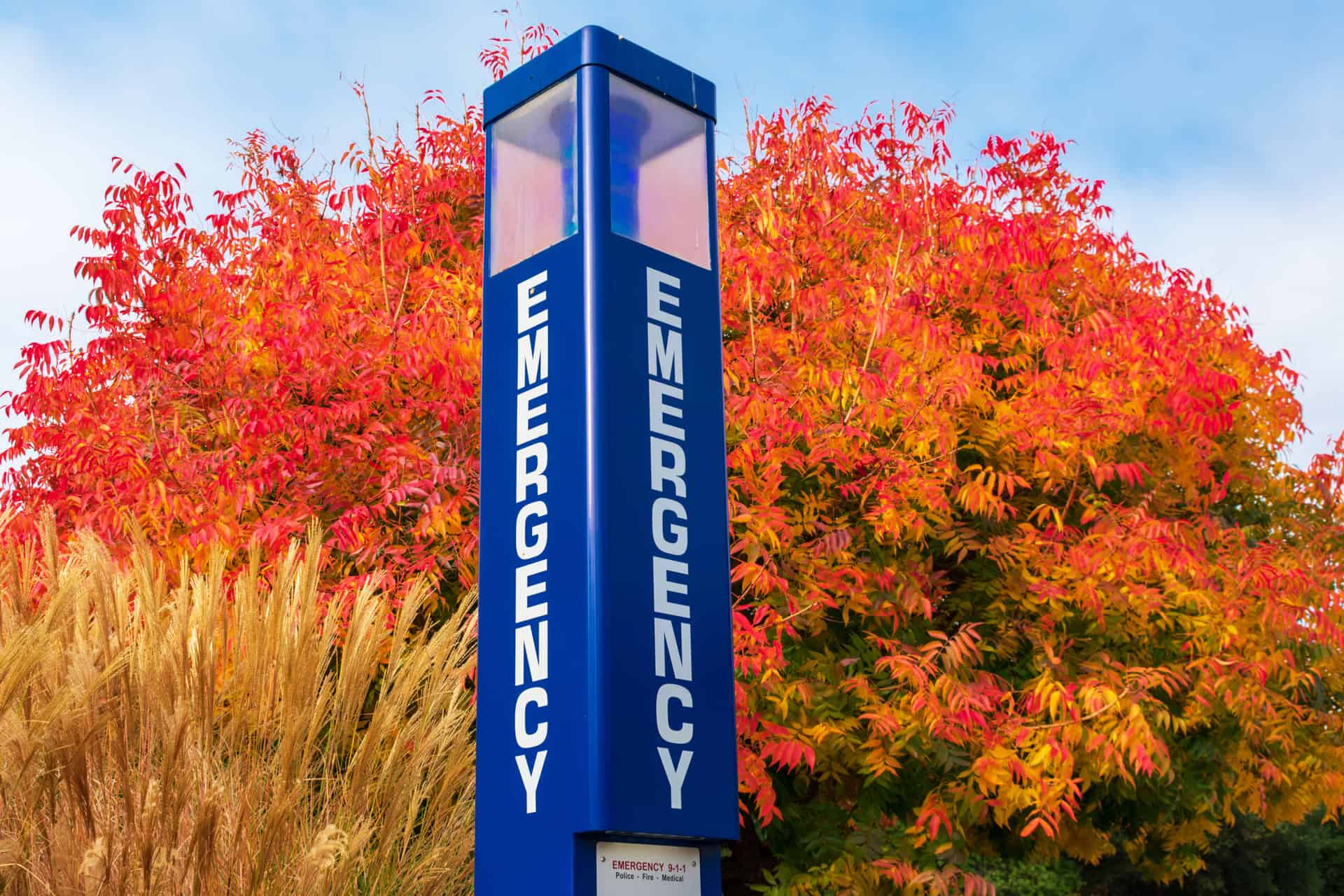
Blue light towers have been the unrelenting security guards of universities, hospitals, and parks far and wide for decades. The highly recognizable tall, thin, blue towers are a symbol of safety… something to run to if things go wrong during an early morning jog or a late night walk home. The towers provide a way for people to communicate directly with nearby security forces. Some blue lights provide 2-way communication with a dispatch center, while others provide a panic button feature. Due to the prevalence of blue light towers, anyone (at any time) can easily alert security forces that they’re in distress as long as there is a blue light tower in that area.
Software Integration: Showing all angles
With a simple software integration, blue light towers are now beginning to further elevate themselves as the protectors of communities everywhere. This integration, provided by 911Cellular, can display nearby security camera footage (and blue light tower camera footage, if available) to the proper dispatchers when any blue light tower on the institution’s campus is activated. Pulling security camera footage allows dispatchers to better understand and track the progress of an incident as they prepare to respond.
Software Integration: Receive pertinent information that can be easily categorized
With that same software integration, the 911Cellular Portal receives specific, useful information (including location) relating to each emergency call. Each call that comes in is viewable within its own separate, collapsible call tab that indicates where the call is coming from, and from what type of device (smartphone, computer, blue light tower).
Furthermore, when an incident is deemed resolved by a dispatcher, each call can be given a custom label (pre-configured by the institution). In this scenario, that means that dispatchers can easily apply the category of ‘blue light activation’, or something similar, to calls received from a blue light tower when they resolve the incident. This helps tremendously for categorization purposes when analyzing past emergency call data coming from both blue light towers and other sources (like regular call-ins or other panic buttons).
To learn more about how blue light tower integrations can bolster your existing blue light towers, visit our website, or contact us directly at info@911cellular.com.
Related Articles
Stop Campus Hazing Act 2026: What to Verify Before October 1
As colleges and universities prepare to distribute their Annual Security Reports by October 1,...
Accessible Emergency Alerts: 7-Point Audit for Safety Teams
An emergency alert is not effective if a recipient cannot hear it, see it, understand it or act on...
Oregon SB 537 Requirements: What Healthcare Leaders Should Know
Oregon Senate Bill 537 expanded healthcare workplace violence prevention requirements—and meeting...
Navigating the Approaching N.Y. Pub. Health Law § 2832 Deadlines
On September 18, 2026, N.Y. Public Health Law § 2832 officially takes effect. For general hospitals...
Why Caregiver Safety is Healthcare’s Smartest 2026 Strategy
In 2026, as healthcare executives scrutinize every budget line item against razor-thin margins, one...
Supercharging Healthcare Safety with Intelligent Dispatch Workflows
Managing safety workflows across a complex integrated delivery network, where acute care...